 Steve Jonas
8 hours ago in Technology & IT Services
High Authority Social Bookmarking Site for Canadian SEO in 2026 - A2Bookmarks Canada
A2Bookmarks Canada is the premier Canadian social bookmarking site designed to help you save, organize and share favorite web pages. Our social bookmarking platform for Canada makes it easy to manage important links while connecting with other users across top Canadian social bookmarking sites. As one of the leading social bookmarking sites in Canada for 2026, we offer tools to strengthen your digital presence and grow your business online. Elevate your Canadian SEO strategy by bookmarking content for local audiences, increasing relevance across social bookmarking platforms in Canada. Optimize your search rankings with targeted backlinks and community engagement on Canada's fastest-growing bookmarking network. Share, categorize, and promote links to build authority and drive quality traffic. Join our Canadian social bookmarking community today to make your online experience more efficient and connected.
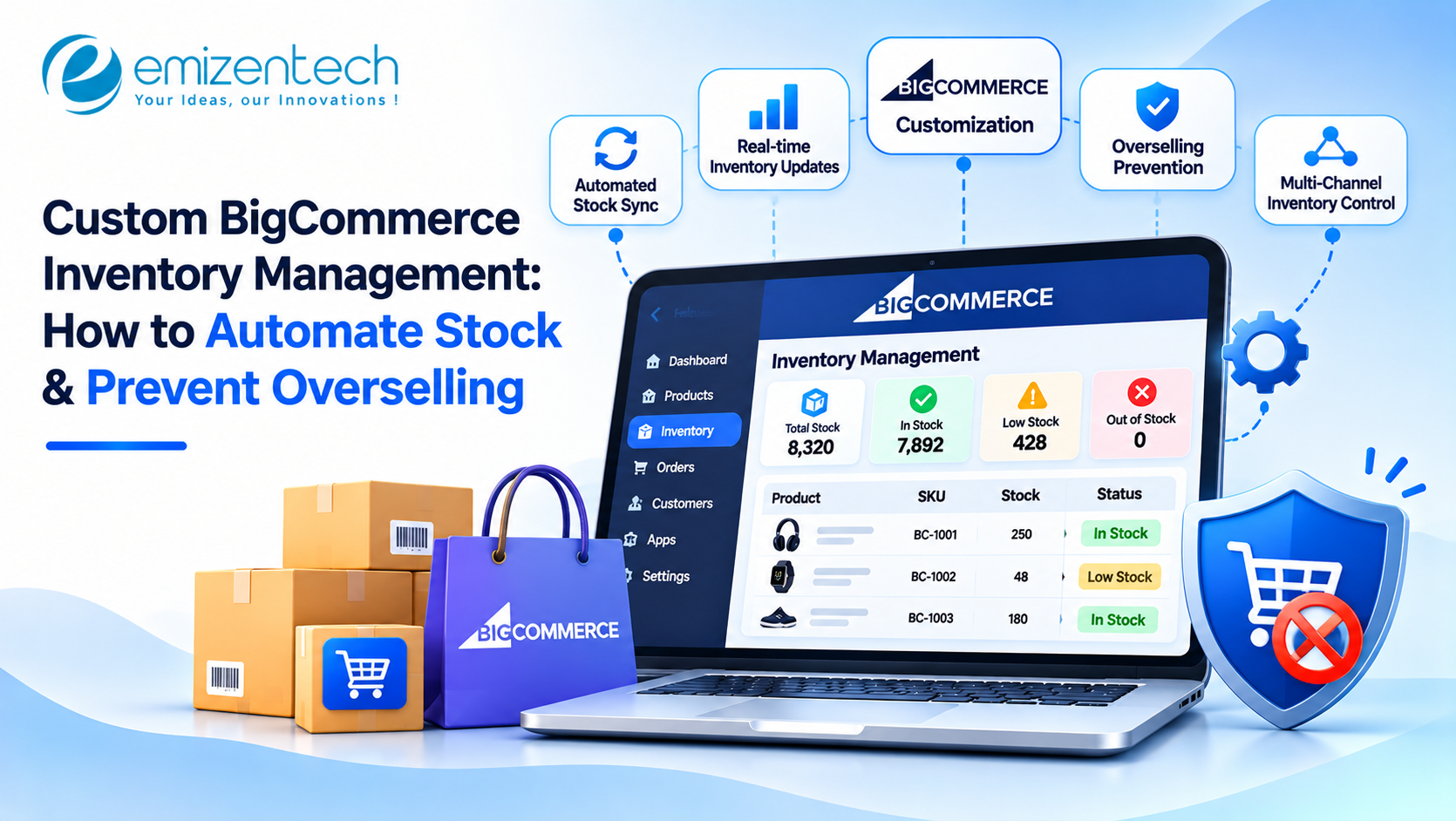
Custom BigCommerce Inventory Management: How to Automate Stock & Prevent Overselling emizentech.com
Steve Jonas
8 hours ago in Technology & IT Services
Overselling a product that is out of stock costs more than one lost sale. It leads to cancelled orders, refund requests, and customers who may not return. As an online store adds products, channels, and warehouses, keeping stock numbers accurate gets harder.
Custom BigCommerce inventory management solves this by connecting your store with the systems that hold your inventory data and by automating the tasks that cause errors. This guide explains how to automate stock and prevent overselling on BigCommerce, where custom development adds value, and what to look for in a development partner.
Why Overselling Happens and Why Inventory Accuracy Matters
Inventory is the largest working capital item for most online sellers. When it is inaccurate, every other part of the business suffers. Pages show products that cannot ship, ad budgets promote items that are sold out, and support teams spend hours explaining delays.
A well-built BigCommerce store keeps stock data accurate across every place a customer can buy, including your storefront, marketplaces, social channels, and physical locations.
What BigCommerce Offers Out of the Box
BigCommerce includes core inventory features that work well for small and mid-sized catalogs:
- Inventory tracking at the product and variant level
- Low stock notifications for the store owner
- Options to hide or flag out-of-stock products
- Stock updates when orders are placed, edited, or cancelled
- Bulk updates through import and export tools
These features handle the basics, but growing stores need more. Custom BigCommerce inventory management automates stock updates, syncs every sales channel, and prevents overselling, and expert BigCommerce development makes it work with your ERP and warehouse systems.
A store with one warehouse and a modest catalog can often run well on these settings. Problems start when stock lives in several systems at once and updates arrive late.
How Custom BigCommerce Inventory Management Automates Stock
Custom development fills the gaps in standard settings with six upgrades that keep stock accurate and reduce manual work.
1. ERP and Warehouse System Integration
Most growing sellers keep master inventory data in an ERP or warehouse management system (WMS). Custom integrations connect that system to BigCommerce, so receipts, transfers, and adjustments in the warehouse update the storefront automatically. This removes double entry and the delays that cause overselling.
A typical setup uses both scheduled and event-based syncs, so large catalog updates and single orders are handled without slowing the store.
2. Real-Time Multi-Channel Sync to Prevent Overselling
Selling on Amazon, eBay, Google, and social platforms from one catalog is only reliable when every channel shares one source of truth. Development work sets up sync rules and API connections so a sale on one channel reduces available stock everywhere within moments.
Safety buffers can also be set per channel, so a small reserve of stock is held back for your own storefront during busy periods.
3. Multi-Location Inventory Logic
Stores with several warehouses or retail locations need rules for where stock is held and where orders ship from. Custom logic can route each order to the closest location with stock, split shipments when needed, and show shoppers accurate local availability.
Shoppers benefit too, since they can see whether an item is available for delivery or in-store pickup before they reach checkout.
4. Automated Replenishment
Reorder points and safety stock levels can be built into the workflow. When a product falls below its threshold, the system creates a purchase order draft or alerts the buyer, taking supplier lead times into account.
Over time, these rules can be tuned using sales velocity and seasonality, so reorder quantities follow real demand instead of guesses.
5. Custom Dashboards and Reporting
Standard reports rarely answer questions such as which products are slow movers or how long stock lasts at the current sales rate. Custom dashboards show inventory turnover, sell-through rate, carrying costs, and dead stock in one place.
Teams can also schedule weekly reports, so buyers, warehouse staff, and finance all work from the same numbers.
6. Pre-Orders, Backorders, and Bundles
Custom development can handle stock rules that standard settings do not cover, such as pre-order limits, backorder messaging, kits made from several SKUs, and subscription products.
Clear stock messaging on product pages keeps expectations honest and reduces support questions about delivery dates.
How Automated Inventory Flow Works on a Custom BigCommerce Build
Once the integrations are in place, every order triggers a chain of automatic updates, from checkout to restocking.
- A customer places an order on the storefront or a connected channel.
- BigCommerce reduces available stock and passes the order to the ERP or WMS through the API.
- The warehouse picks, packs, and ships the order, and shipment data returns to the store.
- Stock adjustments in the warehouse sync back to BigCommerce and every other channel.
- Reorder rules check stock levels and trigger purchasing when needed.
- Dashboards update so the team can see performance and plan ahead.
Each step runs automatically, so staff only step in for exceptions such as damaged goods or supplier delays.
Benefits of Custom BigCommerce Inventory Management
Automating stock control on BigCommerce pays off in accuracy, speed, and cost savings.
- Fewer oversells and cancellations: Real-time sync keeps availability accurate.
- Less manual work: Automation replaces spreadsheet updates and re-keying.
- Lower carrying costs: Better forecasting and replenishment reduce excess stock.
- Faster fulfillment: Orders reach the right warehouse without delay.
- Better customer experience: Shoppers see accurate stock and delivery estimates.
- Room to scale: The setup supports new channels, regions, and product lines.
Together, these gains mean the team spends less time fixing stock errors and more time on growth.
Use Cases by Business Type
Inventory needs differ by industry, and a custom setup can be shaped around each one.
- Fashion and apparel: Manage size and color variants across seasons and sales channels.
- Electronics and accessories: Track serial numbers, bundles, and fast-moving SKUs.
- B2B and wholesale: Handle customer-specific pricing, bulk orders, and warehouse allocation.
- Health and beauty: Monitor batch numbers and expiry dates for regulated products.
Whatever the category, the principle is the same: stock rules should follow how your products are bought, stored, and shipped.
What to Look for in a BigCommerce Development Partner
The right partner decides how reliable your stock sync will be, so check these points before you commit.
- Proven experience with BigCommerce APIs and headless or custom storefronts
- Past work integrating ERP, WMS, and marketplace platforms
- A clear process for testing stock sync before launch
- Attention to security, performance, and data accuracy
- Support and maintenance after go-live
Conclusion
Accurate inventory is the foundation of a reliable online store. While BigCommerce provides a solid starting point, custom development unlocks real-time syncing, multi-location logic, automated replenishment, and tailored reporting built around your operations. The result is fewer oversells, lower costs, and a smoother experience for every customer.
Ready to take control of your stock? EmizenTech builds tailored BigCommerce solutions that automate tracking and eliminate overselling through seamless ERP integrations, marketplace connections, and scalable workflows. Connect with our team today to bring your inventory goals to life.
FAQs
1. Can BigCommerce manage inventory across multiple warehouses?
Yes. BigCommerce supports multi-location inventory, and custom development can add routing rules, location-based availability, and integrations with warehouse systems.
2. How does BigCommerce sync inventory with an ERP?
It connects to the ERP through APIs or middleware. Stock changes in either system update the other automatically, which keeps data consistent without manual entry.
3. Can BigCommerce prevent overselling on marketplaces?
Yes. With real-time sync between BigCommerce and each marketplace, a sale on one channel updates available stock on all the others.
4. Do I need custom development, or are built-in features enough?
Built-in features suit small catalogs with one location. Custom development becomes worthwhile when you sell on several channels, use an ERP or WMS, or manage more than one warehouse.
voters
Report Story 
Related Stories








Recent Stories