 Xtrem Aventures Group
10 hours ago in Other Services
High Authority Social Bookmarking Site for Canadian SEO in 2026 - A2Bookmarks Canada
A2Bookmarks Canada is the premier Canadian social bookmarking site designed to help you save, organize and share favorite web pages. Our social bookmarking platform for Canada makes it easy to manage important links while connecting with other users across top Canadian social bookmarking sites. As one of the leading social bookmarking sites in Canada for 2026, we offer tools to strengthen your digital presence and grow your business online. Elevate your Canadian SEO strategy by bookmarking content for local audiences, increasing relevance across social bookmarking platforms in Canada. Optimize your search rankings with targeted backlinks and community engagement on Canada's fastest-growing bookmarking network. Share, categorize, and promote links to build authority and drive quality traffic. Join our Canadian social bookmarking community today to make your online experience more efficient and connected.
Zip Line Equipment Supplier Europe: Essential Safety and Engineering Considerations xtremaventures-group.fr
Xtrem Aventures Group
10 hours ago in Other Services
Adventure tourism continues to create opportunities for resorts, outdoor recreation centres and leisure park developers across Europe. Zip lines have become an attractive feature because they combine outdoor exploration, engineering innovation and memorable visitor experiences. However, developing a successful attraction requires more than installing cables between two points. Careful planning, suitable equipment, structural calculations and reliable safety systems are essential.
Choosing an experienced Zip Line Equipment Supplier Europe is an important step for businesses planning to introduce or upgrade an adventure attraction. From understanding site conditions to selecting braking technology, every engineering decision contributes to the long-term performance and safety of the installation.
1. Understanding the Engineering Requirements of Zip Line Projects
A zip line is an engineered recreational system in which participants travel along a sloping cable using a trolley or pulley arrangement. Its design must account for several technical factors, including cable tension, participant weight, travel speed, structural stability and environmental conditions.
Before construction begins, developers should arrange a detailed site assessment. The assessment helps identify suitable launch and landing locations, available elevation differences, potential obstacles and access requirements.
Important engineering considerations include:
- Cable configuration: The cable arrangement must be calculated according to the intended loads, span and installation conditions.
- Structural supports: Trees, poles and other supporting structures must be assessed for their suitability and stability.
- Slope and elevation: Ground topography influences travel characteristics and the braking requirements.
- Landing arrangements: Arrival areas need appropriate space, visibility and effective deceleration systems.
- Environmental exposure: Wind, rain, temperature variations and corrosion risks should influence material selection.
A professional engineering approach helps ensure that the attraction is designed around the actual characteristics of its location rather than relying on generic installation assumptions.
2. Selecting Equipment That Supports Operational Safety
Equipment selection is one of the most important responsibilities when developing a zip line attraction. Every component must be appropriate for its intended application and compatible with the complete installation.
A reliable Zip Line Equipment Supplier Europe should understand the relationship between individual components and the overall operating system.
Key equipment considerations include:
Cable and Supporting Components
Steel cables, connection systems, anchors and supporting structures must be selected according to engineering calculations. Their suitability depends on loading conditions, environmental exposure and installation requirements. Regular examination is also necessary to identify wear, deformation or other signs of deterioration.
Trolleys and Pulley Systems
The trolley connects participants to the zip line system and enables controlled movement along the cable. Its design should be compatible with the cable configuration, attachment arrangements and intended operating conditions.
Harnesses and Personal Protective Equipment
Harnesses, connectors and other protective equipment should meet applicable requirements and manufacturer specifications. Correct sizing, inspection and participant instruction are essential parts of safe operation.
Braking Technology
Braking systems are particularly important because participants must arrive at a controlled speed. Primary braking arrangements should be supported by appropriate emergency protection wherever the risk assessment identifies a need.
3. Understanding European Safety Standards and Compliance
European adventure attractions require a structured approach to safety management. EN 15567-1:2015+A1:2020 provides construction and safety requirements for permanent and mobile ropes courses and their components.
The standard addresses important subjects such as structural design, materials, activity systems, personal protective equipment, inspection and maintenance.
For zip line installations, several considerations deserve particular attention:
- A passive braking system should always be provided.
- Primary braking arrangements should control deceleration at the arrival area.
- Emergency braking should be incorporated where failure of the primary brake could create a significant risk.
- Departure regulation should be considered when the landing area or part of the route cannot be seen from the starting point.
- Supporting cables and safety lines must be appropriately calculated.
- Equipment should be inspected and maintained according to applicable requirements.
Operators should also consider EN 15567-2, which addresses operational requirements.
Compliance is not simply a construction-stage responsibility. It involves appropriate documentation, competent inspections, maintenance procedures, staff training and effective supervision throughout the attraction’s operating life.
4. How Site Conditions Influence Zip Line Design
Every adventure park has different geographical and environmental characteristics. A design suitable for a mountainous resort may not be appropriate for a forest recreation centre or a developed leisure destination.
Site conditions influence equipment selection, installation methods and the overall visitor experience.
Terrain and Topography
Elevation differences, slopes and natural obstacles influence cable alignment and travel characteristics. A detailed topographical survey helps engineers identify practical routes and suitable structural positions.
Weather Exposure
Wind conditions can influence participant movement and operational decisions. Rain and moisture may also affect exposed components, while temperature variations can influence material performance.
Trees and Natural Structures
Forest-based installations require careful assessment of supporting trees and their surrounding environment. Attachment systems should be designed to minimise unnecessary damage to trees and root systems.
Available Space
The launch area, travel corridor and landing zone must be considered together. Adequate access for participants, staff, maintenance teams and emergency procedures should be included in the planning process.
A Zip Line Equipment Supplier Europe with experience in different site conditions can help developers evaluate these factors before finalising an installation.
5. Zip Coaster Technology: An Innovative Adventure Attraction
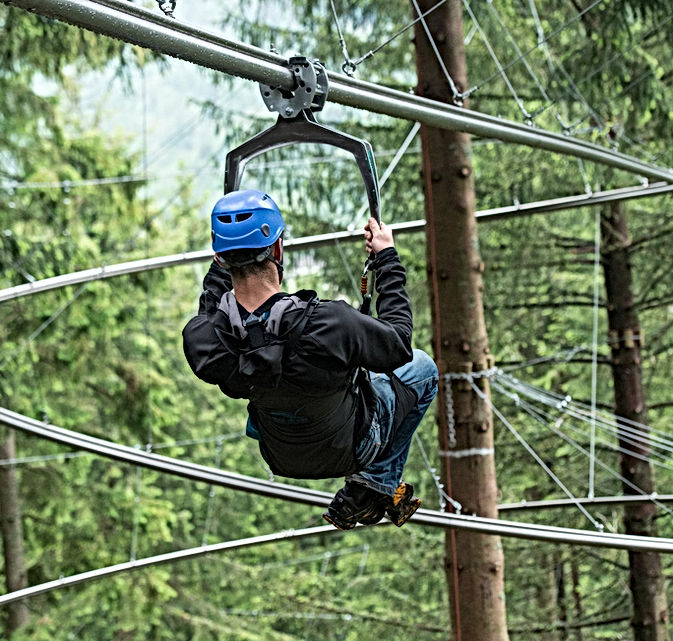
Traditional zip lines generally follow a relatively straightforward descending route. However, newer attraction concepts introduce additional engineering possibilities through curved tracks and specialised movement systems.
XTREM AVENTURES Group presents a Zip Line Coaster concept that uses a stainless steel tube and a specialised pulley system. According to the company’s published technical information, the attraction can incorporate 360-degree bends and loops within a forest environment.
Its published technical specifications include:
- Length: Approximately 200 to 1,500 metres, depending on terrain and slope.
- Speed: Approximately 30 to 50 km/h, depending on the selected configuration.
- Track configuration: Curves and loops integrated into the route.
- Supporting structures: Trees or poles, depending on the project.
- Design approach: Tailor-made configurations for different surfaces.
- Installation environments: Outdoor and indoor applications.
These figures describe the company’s published Zip Coaster concept and should not be treated as universal specifications for every project. Actual dimensions, speeds and configurations require project-specific engineering assessment.
This type of attraction can provide an alternative development opportunity for resorts, forest adventure parks and leisure destinations looking to diversify their activities.
6. Inspection, Maintenance and Long-Term Performance
Installing appropriate equipment is only the beginning of responsible attraction management. Regular inspections and planned maintenance help identify potential problems before they affect daily operations.
A structured maintenance programme should include:
- Visual checks of cables, connections and supporting structures.
- Examination of trolleys, pulleys and braking components.
- Inspection of harnesses and personal protective equipment.
- Monitoring of corrosion, deformation and material deterioration.
- Verification of safety instructions and operating procedures.
- Documentation of maintenance activities and inspection findings.
Inspection frequency and procedures should follow applicable standards, manufacturer instructions and competent professional recommendations.
Operators should also establish clear procedures for reporting defects, restricting access to affected equipment and arranging repairs. Any component showing signs of damage should be assessed before being returned to service.
7. Why Choosing an Experienced Supplier Matters
Selecting an appropriate supplier can influence the technical quality and practical development of an adventure park. Developers should consider more than the equipment itself when evaluating potential project partners.
Relevant factors include engineering experience, understanding of applicable safety requirements, design capabilities, installation knowledge and after-sales technical support.
A professional supplier should be able to discuss project requirements, assess site characteristics and explain how different components work together.
For park operators, resort developers and municipal authorities, a well-planned installation can support operational efficiency, visitor satisfaction and long-term attraction management.
Building Better Adventure Experiences with XTREM AVENTURES Group
Developing a zip line attraction requires coordination between engineering, equipment selection, structural planning and operational safety. Each project should reflect its intended audience, geographical conditions and management requirements.
XTREM AVENTURES Group works in the adventure and leisure park sector, offering equipment supply, design and construction solutions for outdoor adventure attractions. Its Zip Coaster concept demonstrates how specialised track configurations can create additional possibilities for recreational developments.
For organisations considering a new attraction or expanding an existing facility, professional project planning provides a foundation for making informed technical decisions.
Contact XTREM AVENTURES Group
For information about adventure attraction design, zip line installations and customised project requirements, contact XTREM AVENTURES Group:
- Address: 623, Route de la Poudrerie, 74210 DOUSSARD, France
- Phone: +33 6 13 49 93 87
- Email: raphael@xtremaventures.fr
Explore professional adventure park development solutions with XTREM AVENTURES Group.
Frequently Asked Questions (FAQs)
1. What should developers consider when selecting a zip line equipment supplier in Europe?
Developers should evaluate engineering expertise, equipment suitability, structural design capabilities, safety considerations, installation experience and maintenance support. Understanding applicable European standards is also important when planning an adventure attraction.
2. What is a Zip Line Coaster?
A Zip Line Coaster is a specialised zip line attraction that uses a stainless steel tube and a dedicated pulley system. The XTREM AVENTURES Group concept incorporates bends and 360-degree loops to create a different riding experience from conventional straight-route zip lines.
3. What are the published technical specifications of the XTREM Zip Coaster?
The company’s website describes configurations ranging from approximately 200 to 1,500 metres, with speeds of approximately 30 to 50 km/h. Actual specifications depend on terrain, slope and project configuration.
4. Can a Zip Coaster be installed in different environments?
Yes. XTREM AVENTURES Group presents both outdoor and indoor Zip Coaster applications. Each installation is designed according to the available surface and project requirements, with appropriate engineering and site assessments needed to determine its suitability.
voters
Report Story 
Related Stories







Recent Stories