 Steve Jonas
3 hours ago in Technology & IT Services
High Authority Social Bookmarking Site for Canadian SEO in 2026 - A2Bookmarks Canada
A2Bookmarks Canada is the premier Canadian social bookmarking site designed to help you save, organize and share favorite web pages. Our social bookmarking platform for Canada makes it easy to manage important links while connecting with other users across top Canadian social bookmarking sites. As one of the leading social bookmarking sites in Canada for 2026, we offer tools to strengthen your digital presence and grow your business online. Elevate your Canadian SEO strategy by bookmarking content for local audiences, increasing relevance across social bookmarking platforms in Canada. Optimize your search rankings with targeted backlinks and community engagement on Canada's fastest-growing bookmarking network. Share, categorize, and promote links to build authority and drive quality traffic. Join our Canadian social bookmarking community today to make your online experience more efficient and connected.
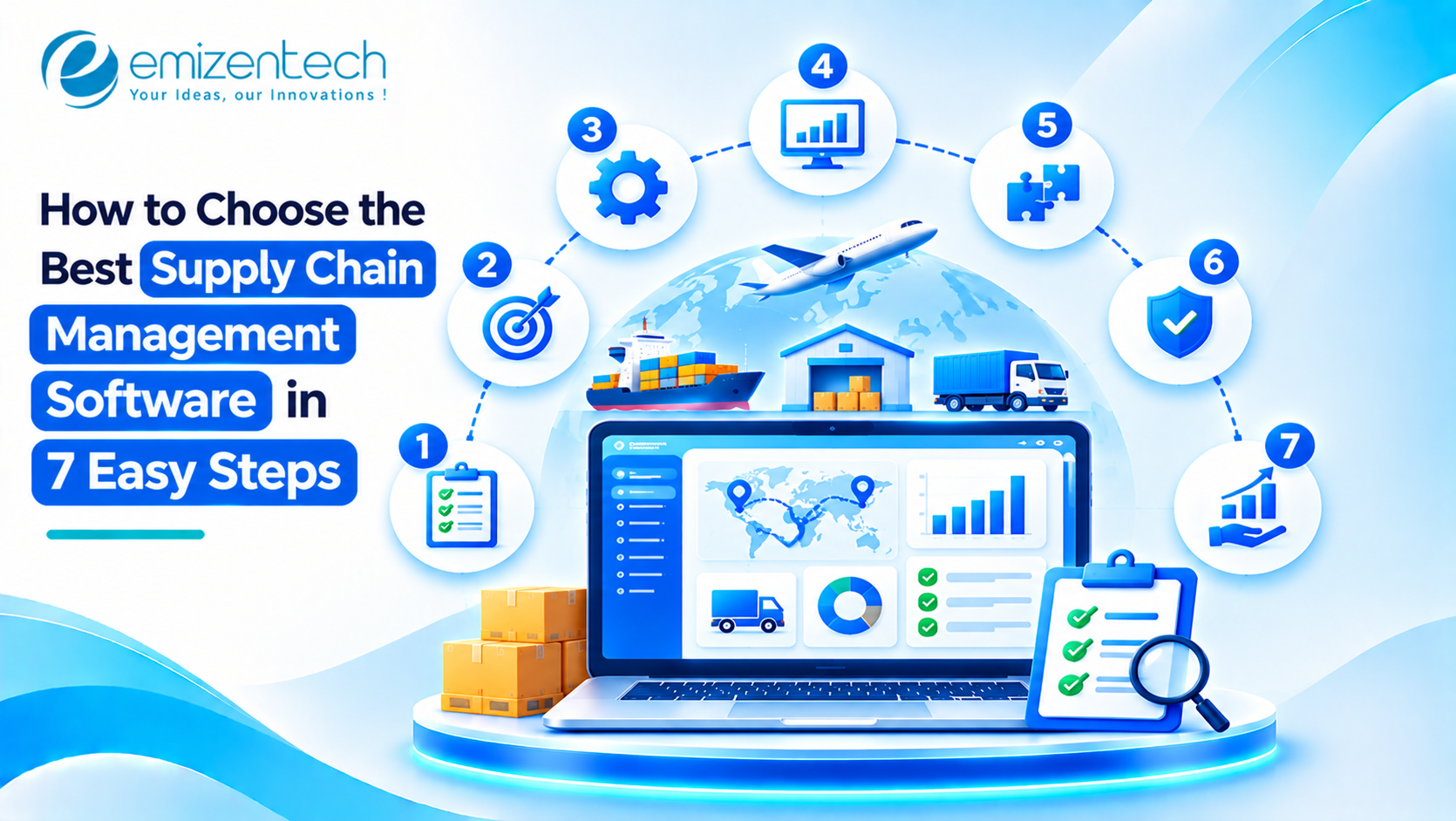
How to Choose the Best Supply Chain Management Software in 7 Easy Steps emizentech.com
Steve Jonas
3 hours ago in Technology & IT Services
Managing procurement, inventory, warehousing, and logistics becomes increasingly complicated as businesses expand their operations. Disconnected systems, manual data entry, delayed shipments, and inaccurate inventory records can affect productivity and increase operational costs.
Choosing the right supply chain management software helps businesses coordinate these activities, improve operational visibility, and make informed decisions. However, selecting a solution requires more than comparing features or subscription prices. Businesses must consider their existing workflows, integration requirements, scalability, security, and long-term objectives.
Here are seven practical steps to help you evaluate different solutions and choose the right software for your business.
7 Easy Steps to Choose the Best Supply Chain Management Software
Before investing in a solution, businesses should evaluate their operational requirements and understand which capabilities will address their current challenges. The following steps provide a structured approach to making the right selection.
1. Understand Your Business and Supply Chain Requirements
Start by identifying the operational problems you want the software to solve. Different businesses have different supply chain requirements depending on their industry, order volumes, warehouse operations, and supplier networks.
For example, a manufacturing business may need better raw material tracking and production planning, while a retail business may prioritize inventory synchronization and order fulfillment.
Evaluate your existing processes and identify areas that need improvement, such as:
-
Inventory tracking and stock management.
-
Procurement and supplier coordination.
-
Warehouse operations and order processing.
-
Shipment tracking and delivery management.
-
Demand planning and forecasting.
Also, establish measurable objectives, such as reducing stock discrepancies, improving order processing time, or minimizing procurement delays. These requirements will help you narrow down suitable software options.
2. Evaluate the Essential Software Features
Once your requirements are clear, compare the features available in different solutions. The right features should address your operational needs rather than introduce unnecessary complexity.
When evaluating supply chain management software, consider these essential capabilities:
-
Inventory management: Tracks stock levels, product movement, warehouse availability, and reorder requirements.
-
Procurement management: Helps manage purchase orders, supplier information, and purchasing activities.
-
Demand forecasting: Analyzes historical sales and demand patterns to support inventory planning.
-
Warehouse management: Improves stock handling, picking, packing, and warehouse coordination.
-
Order management: Provides visibility into order processing and fulfillment activities.
-
Shipment tracking: Monitors deliveries and provides updates on shipment status.
-
Reporting and analytics: Generates insights into inventory performance, supplier activities, and operational efficiency.
Prioritize features based on your business requirements. A smaller business may not need advanced predictive analytics initially, whereas a large distributor handling multiple warehouses may benefit significantly from these capabilities.
3. Check Integration with Existing Business Systems
Your supply chain software should work effectively with the technology your business already uses. Operating separate systems without proper integration can create duplicate records, inconsistent information, and additional manual work.
Evaluate whether the solution supports integration with:
-
Enterprise Resource Planning (ERP) systems.
-
Customer Relationship Management (CRM) platforms.
-
Accounting and financial management software.
-
eCommerce platforms and order management systems.
-
Warehouse and transportation management systems.
Check API availability, integration flexibility, and real-time data synchronization. For example, connecting inventory management with an eCommerce platform can automatically update product availability when an order is placed.
Before selecting a solution, confirm that data can move accurately between connected systems without requiring repeated manual entry.
4. Compare Cloud-Based and On-Premises Deployment
Deployment architecture affects software accessibility, infrastructure requirements, maintenance, and overall costs. Businesses should compare available deployment models before making a decision.
Cloud-based software operates through cloud infrastructure and can generally be accessed through an internet connection. It reduces the need to maintain dedicated local infrastructure and often provides subscription-based pricing.
On-premises software is installed on the organization’s own servers. It offers greater direct control over infrastructure and data management but requires internal IT resources for maintenance, updates, and security.
Consider the following factors when comparing both options:
-
Initial investment and recurring expenses.
-
Data ownership and security requirements.
-
Infrastructure and maintenance responsibilities.
-
Remote accessibility and system availability.
-
Customization and deployment flexibility.
The right choice depends on your IT capabilities, security policies, operational structure, and budget.
5. Assess Scalability and Customization Options
A software solution that meets your current requirements may become inadequate as your business grows. Increasing order volumes, additional suppliers, new warehouses, and expanding distribution networks can introduce more complex operational demands.
Therefore, evaluate whether the software can accommodate future changes without requiring a complete system replacement.
Check whether it supports:
-
Multiple warehouses and business locations.
-
Increasing transaction and order volumes.
-
Additional suppliers and distribution channels.
-
Business-specific workflows and approval processes.
-
New integrations and reporting requirements.
Customization is equally important when standard features do not match your existing processes. However, avoid unnecessary customization because it can increase implementation costs and make future maintenance more complicated.
Choose a solution that offers sufficient flexibility while keeping its architecture manageable.
6. Review Security, Reporting, and Data Management
Supply chain systems handle important business information, including supplier records, purchase orders, inventory data, shipment details, and financial transactions. Protecting this information should be a key consideration during software evaluation.
Review the security capabilities offered by each vendor, including:
-
Role-based access permissions.
-
Data encryption during transmission and storage.
-
Regular backups and recovery procedures.
-
User authentication and activity monitoring.
-
Security updates and vulnerability management.
Reporting capabilities also deserve attention. A useful dashboard should provide visibility into inventory levels, supplier performance, procurement expenses, order fulfillment, and shipment delays.
For example, identifying recurring supplier delays through performance reports can help purchasing teams evaluate suppliers and adjust procurement plans.
Prioritize solutions that provide reliable data, meaningful reporting, and appropriate security controls.
7. Compare Pricing, Vendor Support, and Implementation
After evaluating technical capabilities, compare the overall investment and the support available from the software vendor. The lowest-priced option may not deliver the best long-term value if implementation, customization, or maintenance expenses are high.
Review the complete cost structure, including:
-
Software licensing or subscription fees.
-
Implementation and configuration costs.
-
Integration and customization expenses.
-
Employee training and onboarding.
-
Maintenance and technical support.
Also, evaluate the vendor’s implementation experience, customer support availability, documentation, and service-level agreements.
Before making a final decision, request a product demonstration or trial. Test important workflows, check system usability, and confirm whether the solution meets your operational requirements.
Discuss the implementation timeline, data migration process, employee training, and post-launch support with the vendor. This helps prevent unexpected expenses and operational disruptions during deployment.
Common Mistakes to Avoid When Choosing Supply Chain Software
Even a feature-rich solution can create operational difficulties if it does not align with existing workflows and business requirements. Avoid these common mistakes during the selection process:
-
Choosing based only on price: Lower subscription costs do not always mean lower total ownership expenses.
-
Ignoring integration requirements: Incompatible systems can create data inconsistencies and manual work.
-
Overlooking employee training: Complicated interfaces and insufficient training can reduce software adoption.
-
Neglecting future requirements: Limited scalability can make the solution unsuitable as operations expand.
-
Skipping vendor evaluation: Inadequate technical support can delay implementation and issue resolution.
Taking time to evaluate these factors can help businesses avoid unnecessary expenses and implementation problems.
Final Checklist Before Selecting Your Software
Before finalizing a solution, review these criteria to ensure it meets your technical, operational, and financial expectations.
Conclusion
Choosing the right software requires a clear understanding of your operational challenges, technical requirements, and long-term business goals. Evaluating features, integration capabilities, deployment options, scalability, security, and total ownership costs can help you make a more informed decision.
The right supply chain management software should simplify complex processes, improve coordination between departments, and provide the visibility needed to manage business operations effectively.
With 12+ years of technology experience, EmizenTech delivers web, mobile, enterprise, and custom software solutions to help businesses address their evolving technology requirements. Its technical expertise can support organizations looking to improve operational workflows and build scalable digital systems.
voters
Report Story 
Related Stories












Recent Stories