 Onlive Server
5 hours ago in Technology & IT Services
High Authority Social Bookmarking Site for Canadian SEO in 2026 - A2Bookmarks Canada
A2Bookmarks Canada is the premier Canadian social bookmarking site designed to help you save, organize and share favorite web pages. Our social bookmarking platform for Canada makes it easy to manage important links while connecting with other users across top Canadian social bookmarking sites. As one of the leading social bookmarking sites in Canada for 2026, we offer tools to strengthen your digital presence and grow your business online. Elevate your Canadian SEO strategy by bookmarking content for local audiences, increasing relevance across social bookmarking platforms in Canada. Optimize your search rankings with targeted backlinks and community engagement on Canada's fastest-growing bookmarking network. Share, categorize, and promote links to build authority and drive quality traffic. Join our Canadian social bookmarking community today to make your online experience more efficient and connected.
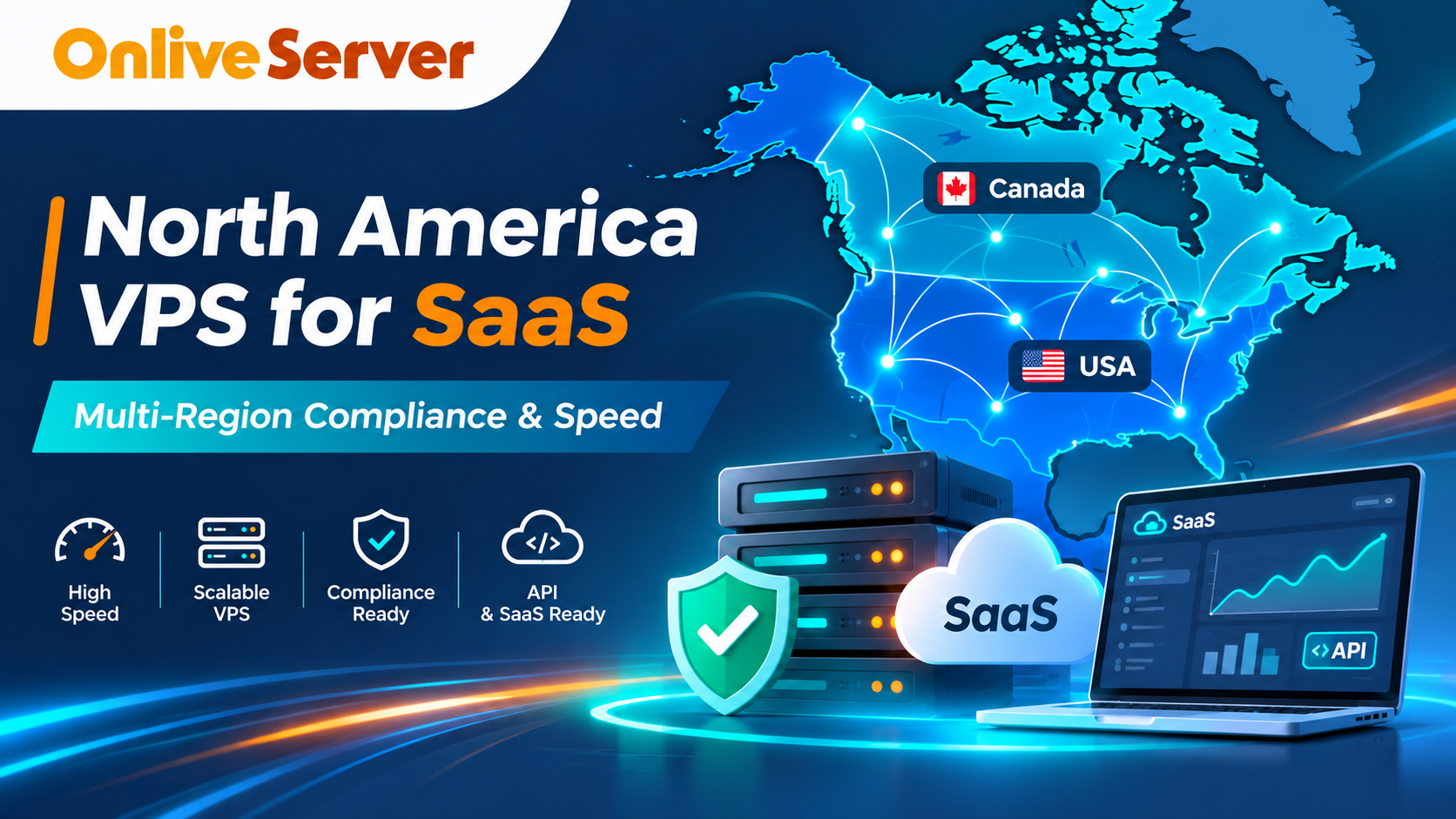
Why SaaS Founders Pick a North America VPS for Multi-Region Compliance & Speed onliveserver.com
Onlive Server
5 hours ago in Technology & IT Services
For SaaS founders, choosing a server location affects much more than website loading speed. It influences how quickly applications respond, where customer information is stored, and how easily a company can meet contractual and regulatory requirements.
A North America VPS is often a practical choice for SaaS businesses serving customers across the United States and Canada. It provides dedicated virtual resources, administrative control, and access to established internet infrastructure. Founders can configure their applications, manage security policies, and plan infrastructure growth without immediately investing in dedicated physical servers.
Still, hosting in North America doesn’t automatically guarantee regulatory compliance or excellent performance everywhere. The benefits depend on the selected datacenter, network connectivity, and how the application is managed.
Why Server Location Matters for SaaS Applications
SaaS platforms rely on continuous communication between users, application servers, databases, and external services. Every request travel through a network, and the distance and routing between these systems influence response times.
For example, a project management platform serving customers in New York, Toronto, and Chicago may benefit from infrastructure located in the eastern or central United States.
A well-connected VPS can help reduce unnecessary network delays and support more consistent application performance.
Server location also matters when a SaaS company integrates payment gateways, authentication providers, email platforms, and third-party APIs. Keeping frequently communicating services geographically close can reduce network round-trip time.
However, proximity alone doesn’t determine performance. Network congestion, peering arrangements, application design, and database efficiency also play important roles.
Data Residency and Multi-Region Compliance
Data residency refers to the geographic location where information is stored or processed. For SaaS companies handling customer records, financial information, or business documents, it can influence both infrastructure decisions and customer contracts.
A North America VPS allows founders to choose infrastructure in a particular jurisdiction, provided the hosting provider offers a verified datacenter location.
For businesses operating across the United States and Canada, this flexibility can help support regional data-handling requirements.
Different privacy rules may still apply:
- United States: Privacy and security obligations depend on the industry, state, and types of personal information processed.
- Canada: PIPEDA and applicable provincial privacy laws may govern personal information handling and cross-border processing.
- European Union: GDPR requirements may apply to businesses serving EU residents, including rules governing international data transfers.
Canadian privacy guidance emphasizes organizational accountability when personal information is transferred to third parties for processing.
Similarly, certain EU-to-US data transfers may require an appropriate legal transfer mechanism, depending on the recipient and circumstances.
Founders should also verify where backups, monitoring records, disaster recovery copies, and third-party integrations store information. Selecting a US datacenter doesn’t necessarily mean every copy of customer data remains in the United States.
Supporting SOC 2 Readiness with VPS Infrastructure
SOC 2 is an independent examination of a service organization’s controls against applicable Trust Services Criteria, including security and potentially availability, confidentiality, processing integrity, and privacy.
Many growing SaaS businesses prepare for SOC 2 examinations because enterprise customers want evidence that their information is handled responsibly.
A properly managed VPS can support this process by allowing administrators to establish documented security controls.
Important practices include:
- Restricting administrative access through role-based permissions.
- Using multifactor authentication wherever supported.
- Encrypting sensitive information during transmission and storage.
- Maintaining system logs and monitoring security events.
- Applying operating system and application security updates.
- Scheduling backups and regularly testing restoration procedures.
The hosting provider’s responsibilities should be clearly separated from those of the SaaS company.
A VPS with security features does not make an application SOC 2 compliant. Founders still need appropriate internal policies, evidence collection, risk assessments, and independent examination.
What a North American Network Connectivity Improves Speed
North America contains major internet exchange points, cloud regions, telecommunications networks, and commercial datacenters.
Locations such as Ashburn, New York, Chicago, Dallas, and Los Angeles provide access to important network routes serving different geographic markets.
For SaaS applications, this connectivity can be useful when delivering frequent API responses, processing transactions, or maintaining real-time collaboration features.
Strong peering relationships may reduce unnecessary network detours between service providers. That can improve latency, although the result depends on the actual routes used by customers.
Businesses targeting both US coasts should compare network performance from representative user locations rather than assuming a centrally located server will always be fastest.
A content delivery network can also help distribute static assets, while regional application nodes may be appropriate for latency-sensitive workloads.
Why VPS Hosting Appeals to Growing SaaS Startups
Early-stage SaaS companies need enough infrastructure control to support production applications without taking on unnecessary operational costs.
A VPS provides an independent virtual environment where founders can manage their preferred operating system, database software, application framework, and security configuration.
Unlike traditional shared hosting, VPS hosting generally provides allocated CPU, memory, and storage resources, although performance isolation depends on the virtualization platform and provider policies.
Startups can begin with a modest configuration and increase resources as application requirements grow.
Another advantage is predictable budgeting. Fixed-resource VPS plans can make monthly infrastructure spending easier to estimate compared with certain usage-based services.
Founders must still account for backup storage, bandwidth limits, software licensing, administration, and technical support.
For startups evaluating North America VPS infrastructure, Onlive Server’s USA VPS hosting page provides a starting point for reviewing available hosting options. Teams should confirm the current server locations, resource allocations, security responsibilities, and service terms before deployment.
Choosing the Right VPS for Multi-Region SaaS Operations
The best VPS configuration depends on the application rather than a single advertised specification.
A customer relationship management platform with a large database may prioritize memory capacity and storage performance. An API service handling frequent short requests may benefit more from CPU performance and network latency.
Before selecting a provider, SaaS founders should examine the following areas:
- Datacenter location: Confirm where primary workloads and backups will reside.
- Network quality: Test latency and connectivity from important customer regions.
- Storage performance: Evaluate SSD or NVMe storage according to database requirements.
- Security controls: Review firewall options, access restrictions, and backup capabilities.
- Scalability: Understand whether CPU, RAM, and storage can be expanded without significant disruption.
- Support and recovery: Check technical support availability, backup policies, and restoration procedures.
Companies serving customers in multiple jurisdictions may eventually need separate regional deployments. A single North American VPS is a sensible starting point for some applications, but it cannot satisfy every residency requirement.
Conclusion
A North America VPS can give SaaS founders practical control over application performance, server configuration, and customer data placement. Its value comes from combining suitable datacenter locations with reliable connectivity and disciplined infrastructure management.
For startups serving North American customers, a well-selected USA VPS can offer a manageable foundation for application hosting and future expansion.
Compliance still requires more than choosing a geographic location. Founders must understand applicable privacy obligations, document their security controls, and verify how data moves between services.
The right approach is to choose infrastructure around actual customer locations, application requirements, and contractual responsibilities. That creates a stronger foundation for SaaS growth without introducing unnecessary operational complexity.
voters
Report Story 
Related Stories





Recent Stories