 Howard Franco
4 hours ago in Marketing & Advertising
High Authority Social Bookmarking Site for Canadian SEO in 2026 - A2Bookmarks Canada
A2Bookmarks Canada is the premier Canadian social bookmarking site designed to help you save, organize and share favorite web pages. Our social bookmarking platform for Canada makes it easy to manage important links while connecting with other users across top Canadian social bookmarking sites. As one of the leading social bookmarking sites in Canada for 2026, we offer tools to strengthen your digital presence and grow your business online. Elevate your Canadian SEO strategy by bookmarking content for local audiences, increasing relevance across social bookmarking platforms in Canada. Optimize your search rankings with targeted backlinks and community engagement on Canada's fastest-growing bookmarking network. Share, categorize, and promote links to build authority and drive quality traffic. Join our Canadian social bookmarking community today to make your online experience more efficient and connected.
SEO Services in Canada: How Businesses Can Improve Online Visibility and Get More Leads aubreypughroofing.com
Howard Franco
4 hours ago in Marketing & Advertising
Running a business in Canada means competing for attention in a busy online market. Customers often search on Google before choosing a service, comparing products, or contacting a company. If your website does not appear for relevant searches, potential customers may find your competitors instead.
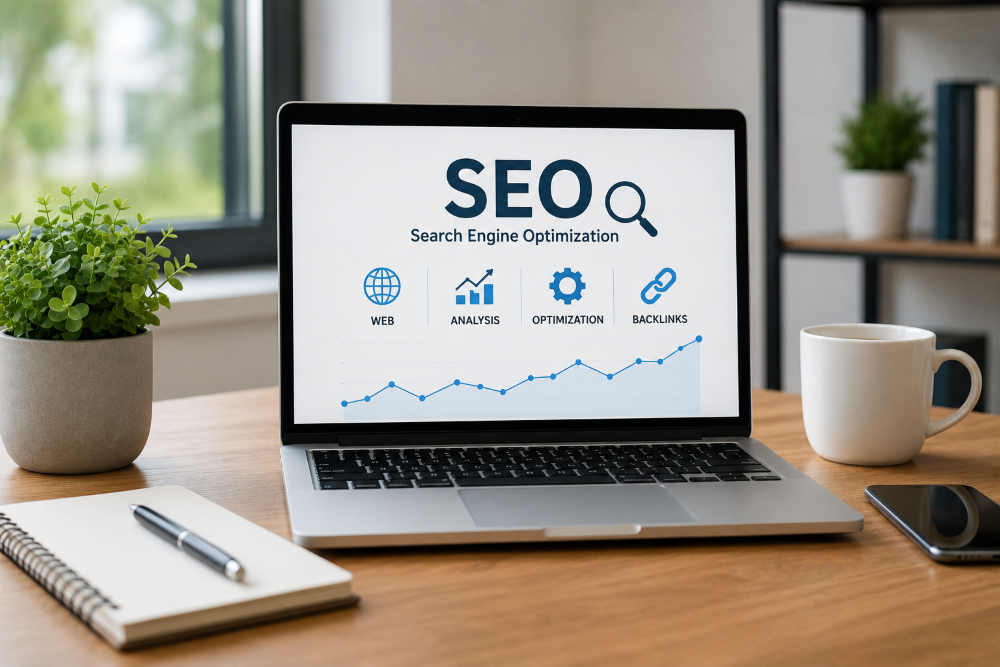
Search engine optimization (SEO) helps businesses improve their visibility in search results and attract people who are already looking for their products or services. A well-planned SEO strategy can also improve website quality, build brand awareness, and support long-term business growth.
This guide explains how SEO works, which services matter most, and how Canadian businesses can build a stronger online presence.
Why SEO Matters for Canadian Businesses
People use search engines to find local services, compare companies, read reviews, and research products. A website that appears for relevant searches has more opportunities to connect with these potential customers.
SEO is useful for businesses of different sizes and industries, including:
- Professional service providers
- Healthcare clinics and dental practices
- Real estate companies
- Retail stores and ecommerce brands
- Home improvement businesses
- Restaurants and hospitality companies
- Educational institutions
A strong SEO campaign focuses on attracting relevant visitors rather than simply increasing website traffic. For example, a plumbing company should target searches related to plumbing services in its service area instead of attracting visitors who are looking for unrelated information.
1. Keyword Research and Search Intent
Keyword research is one of the first steps in an effective SEO campaign. It helps identify the words and phrases people use when searching for products, services, and information.
A useful keyword strategy should match your business goals and customer needs.
For example, a Canadian accounting firm may target searches such as:
- Accountant in Toronto
- Small business accounting services
- Tax preparation services in Canada
- Bookkeeping services for small businesses
Search intent is just as important as keyword selection. Someone searching for “what is bookkeeping” may want basic information, while someone searching for “bookkeeping services for small businesses” may be ready to hire a provider.
Understanding this difference helps businesses create pages that match what visitors expect to find.
2. On-Page SEO for Better Website Content
On-page SEO focuses on improving individual website pages so search engines and visitors can understand them more easily.
Important elements include:
- Title tags: Write clear page titles that describe each page.
- Meta descriptions: Create useful summaries that encourage searchers to visit.
- Headings: Organize content with relevant H1, H2, and H3 headings.
- Content quality: Answer common customer questions with useful information.
- Internal links: Connect related pages to help visitors discover more content.
- Image optimization: Use descriptive file names and suitable alt text.
Every important page should have a clear purpose. Service pages should explain what a business offers, who it serves, and how customers can get in touch.
Avoid repeating keywords unnaturally. Content should read naturally and answer real questions instead of trying to manipulate search rankings.
3. Technical SEO and Website Performance
Even useful content can struggle in search results if a website has technical problems. Technical SEO helps search engines crawl, understand, and index website pages.
A technical SEO review may include:
| Technical area | What to check |
|---|---|
| Website speed | Improve loading performance and reduce unnecessary scripts |
| Mobile usability | Make sure pages work well on phones and tablets |
| Indexing | Check that important pages can appear in search results |
| Crawlability | Review internal links, redirects, and crawl errors |
| XML sitemap | Include important, indexable URLs |
| Structured data | Add suitable schema markup where relevant |
| Core Web Vitals | Review loading, responsiveness, and visual stability |
Regular technical checks can help identify issues before they affect important pages. Businesses should also monitor Google Search Console for indexing problems, search performance, and website errors.
4. Local SEO for Reaching Nearby Customers
Local SEO helps businesses appear when people search for services in a specific city or area.
For example, a dental clinic in Calgary may want to reach people searching for a dentist near them. A home renovation company in Vancouver may want visibility for renovation-related searches in its service areas.
A local SEO strategy can include:
- Creating and maintaining a Google Business Profile.
- Keeping business name, address, and phone details consistent.
- Adding accurate services and business information.
- Collecting genuine customer reviews.
- Creating useful location-specific website pages.
- Building relevant local business citations.
- Adding internal links between service and location pages.
Location pages should contain useful information about the services available in each area. Simply replacing a city name across several pages can create repetitive content that offers little value.
5. Content Marketing and SEO
Content helps search engines understand what a website covers while giving visitors useful information.
A business can publish different types of content based on its audience and services, such as:
- Educational blog posts
- Service guides
- Frequently asked questions
- Product comparisons
- Industry updates
- How-to articles
- Case studies based on real projects
For example, a roofing company could publish an article about signs that a roof needs repair. This content can attract homeowners researching a problem and guide interested readers toward relevant service pages.
A content plan should focus on topics connected to the business. Publishing large numbers of unrelated articles is unlikely to create meaningful results.
6. Off-Page SEO and Quality Backlinks
Off-page SEO includes activities that help build a website’s authority and reputation beyond its own pages. Backlinks are one part of this process.
A backlink is a link from another website that points to your website. Relevant links from useful and trustworthy websites can support your overall SEO strategy.
Businesses can work on earning backlinks through:
- Publishing original industry resources
- Contributing useful guest articles
- Building relationships with relevant websites
- Sharing expert insights
- Creating content that other publishers may reference
- Getting listed in appropriate industry directories
Quality matters more than quantity. Buying large numbers of unrelated links or using manipulative link schemes can create risks. A sustainable approach focuses on relevance, editorial value, and natural link growth.
7. Ecommerce SEO for Online Stores
Online stores need a different approach because they often have many product and category pages.
Ecommerce SEO helps shoppers discover products through relevant searches. Important tasks include:
- Writing unique product descriptions.
- Optimizing category pages.
- Using descriptive product titles.
- Adding clear product images and alt text.
- Reviewing duplicate or thin pages.
- Implementing suitable product structured data.
- Improving site navigation and internal linking.
Product pages should explain key features, specifications, and customer benefits. Clear information can help visitors make informed buying decisions.
8. SEO for AI-Powered Search Experiences
Search is changing as AI-powered tools become part of how people find information. Businesses should make their website content clear, useful, and easy to understand across different search experiences.
Answer Engine Optimization (AEO) and Generative Engine Optimization (GEO) are approaches that focus on making information easier for AI systems to interpret and reference.
Helpful practices include:
- Answering common questions directly.
- Using descriptive headings.
- Publishing accurate and well-organized information.
- Showing relevant experience and expertise.
- Keeping important business details consistent.
- Supporting claims with trustworthy information.
These practices can improve content clarity, but no SEO agency can guarantee that a website will appear in a particular AI-generated answer.
How to Choose an SEO Agency in Canada
Choosing an SEO partner requires more than comparing monthly prices. Businesses should understand what work will be completed and how progress will be measured.
Before selecting an agency, ask about:
- Its SEO process and campaign strategy.
- Experience with similar industries.
- Technical audit and reporting methods.
- Keyword research and content planning.
- Link-building practices.
- Communication and campaign updates.
- How success will be measured.
A good agency should explain its recommendations in simple language and connect SEO activities with business objectives.
Businesses looking for professional support can review SEO Services in Canada to learn about SEO strategies covering technical improvements, on-page optimization, content, backlinks, and performance monitoring.
How Long Does SEO Take to Show Results?
SEO is a long-term process, and results vary between websites. A new website may need more time to build visibility than an established website with useful content and a strong technical foundation.
Competition, website history, content quality, technical issues, and the campaign budget can all affect progress.
During an SEO campaign, businesses should track:
- Organic clicks and impressions
- Keyword ranking changes
- Relevant website traffic
- Leads and inquiries
- Conversion rates
- Indexed pages
- Backlink quality
- Revenue generated through organic search, where measurable
These metrics help businesses understand which activities are working and where improvements are needed.
Final Thoughts
SEO helps Canadian businesses reach potential customers while they are searching for relevant products and services. A strong strategy combines keyword research, useful content, on-page optimization, technical improvements, local SEO, and quality link building.
Rather than chasing quick ranking changes, businesses should focus on building a website that answers customer questions, works smoothly, and makes it easy for visitors to take action. Consistent improvements and regular performance reviews can support stronger online visibility over time.
voters
Report Story 
Related Stories










Recent Stories